

In my experience across many automation projects, labeling was frequently considered an afterthought. Often, the directive was simply a sub-adequate of “we just need a labeler to put these labels on”.
Not thinking through each aspect of an automation project is how things go wrong.
Pretty much every product will need a label. They need to be designed, produced, placed on a roll with an appropriate backing and inner core for the product's intended environment. They might be 100% pre-printed, partially printed, or fully printed on the line. Planning for this, the printing process and ink type must be tested to ensure they withstand shipping and process conditions. In addition, the bottle design and material, type of inspection, machine speed, and a host of other factors come into play.
Misfiring on labeling automation has compounding negative effects. For example, stoppage to replace the label roll and remove backing material affects the complete production line downstream and upstream -- resulting in low OEE (Overall Equipment Efficiency). While effects might be minimal for a 70-ppm intermittent machine, the calculus changes wildly when you’re running at 200 ppm on a continuous production line. Even with a roll of 8,000 labels, stopping for five minutes to replace the roll and the backing can create a production loss of 10,000 parts within an 8-hour shift.
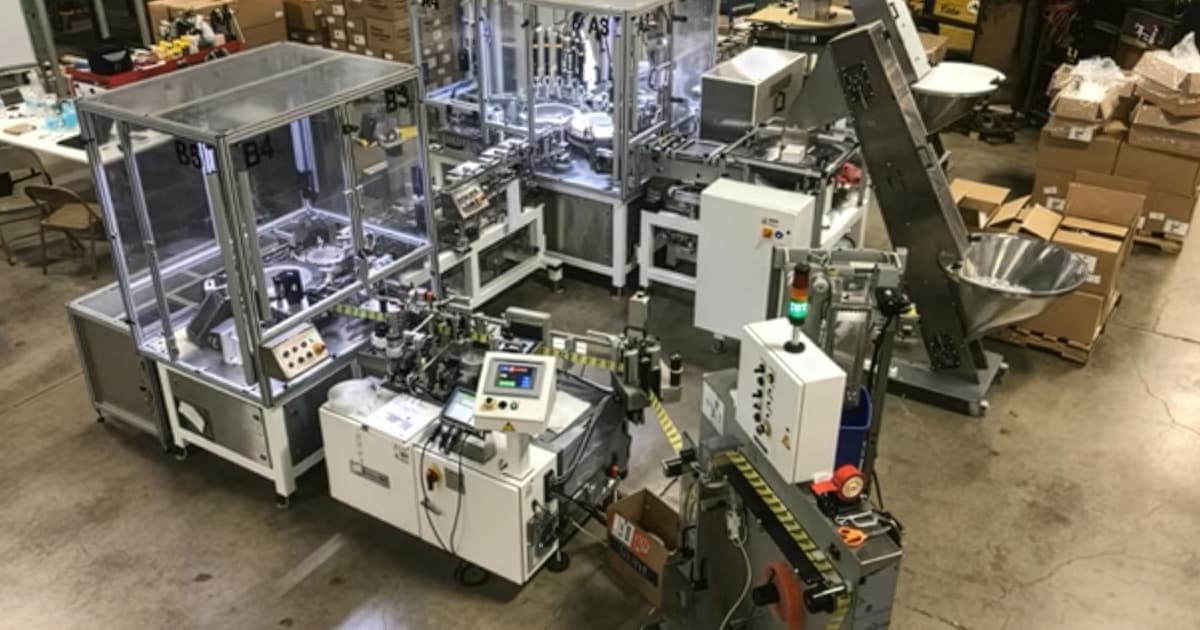
To stop that needless production loss on a high PPM machine, I worked with my labeler supplier to design and implement a tandem label roll replacement system as well as a backer chopping system to eliminate stoppages. This was a significant upgrade for the overall manufacturing line.
In this case, the challenge was particularly interesting: the labels required a plastic backing. As any good automation engineer will tell you, plastic creates static. We designed the system to mitigate that concern while keeping the system operating continuously at speed. Other challenges included printing Lot and UDI information on partially printed labels and then using OCR / OCV to inspect for features – and on several different colored labels!
Needless to say, it was not a trivial task.
When planning on a labeling system, don't treat it as an afterthought. All aspects of the label as well as the labeling process, including OEE, should and must be taken into consideration. This is especially prudent at the time of developing the URS and not at FAT. Or, worse, when you’re going through validation. That would be an uncomfortable and expensive change order to explain to management.
Use my experience to reduce your anxiety by involving MEPSCo at the beginning of the project. It saves you and your company the heartache.
Experience
Over 23 years of experience working with 15+ automation companies and developing 96+ manual and automated manufacturing equipment and lines, ranging from small to large scale.
Proven track record
Delivered the desired outcome on-time and on-budget with minimal or no change orders.


